Sharks Funny Pictures Sharks in the Gulf
20 of the weirdest sharks
Does the word "shark" make you lot conjure up an image of an animatronic Jaws, rolling its dead eyes and gnashing its terrible teeth? While this image of keen whites is iconic, in that location's then much more than to sharks than that horror-flick portrayal. The shark world is full of big-eyed beauties, teeny-tiny cuties and a couple of species that might haunt your nightmares (you'll be glad to hear that the i with rotary-saw teeth went extinct long agone). Really, they're a bunch of lovable weirdos. Here are the strangest sharks to swim the seas.
20. Horn sharks
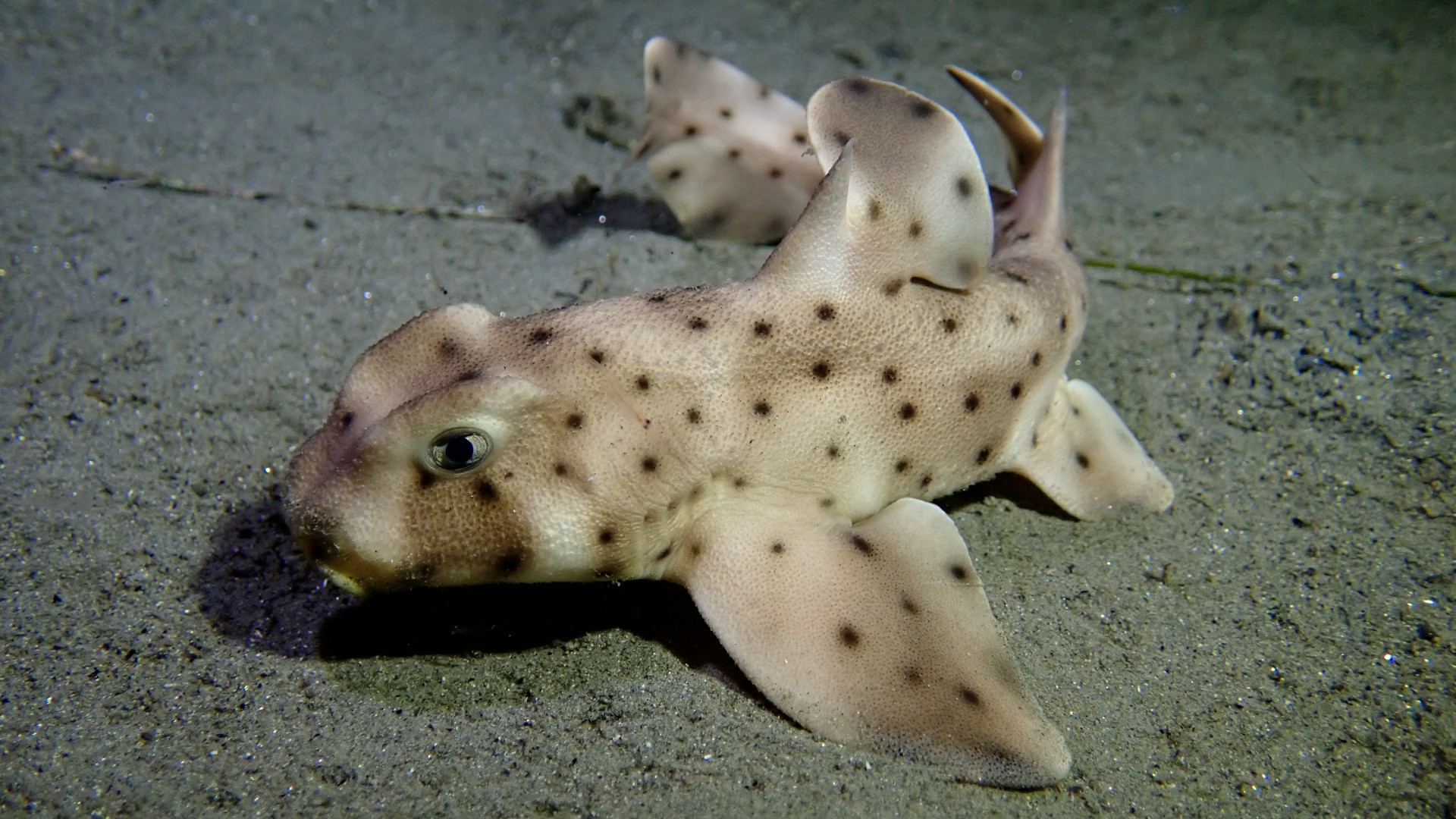
Horn sharks (Heterodontus francisci) are serenity, unassuming little sharks. They spend their days hiding in stone crevices in water less than 40 anxiety (12 meters) deep. At dark, these sharks come up out to hunt, merely they're not sleek nightstalkers. Horn sharks are clumsy swimmers, and they sometimes even use their fins to crawl along the rock instead of swimming, according to the Monterey Bay Aquarium. This works out well for them, equally they eat mostly molluscs and echinoderms similar sea urchins.
As well equally their ability to crawl, horn sharks are too set up autonomously past their sharp spines, which project off both dorsal fins. These spines help protect the sharks from predators — they're prickly from the day baby horn sharks are born.
nineteen. Pocket sharks
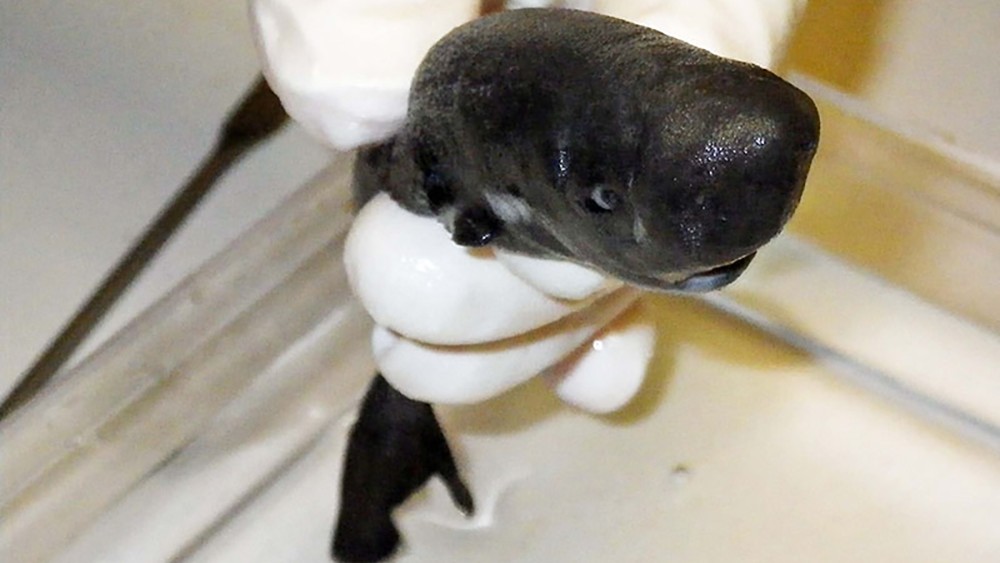
Not simply do these sharks fit in the palm of a hand, they're shaped like tiny sperm whales. The cuteness is unbearable.
These are pocket sharks, or Mollisquama mississippiensis, a pint-sized new species discovered in the Gulf of Mexico in 2010. The sharks aren't actually named for their size, only for a pocket-shaped orifice near their pectoral fin. Because only a few pocket sharks have ever been caught, researchers don't know much nigh their biology, merely the pocket orifice may be used to excrete a pheromone or bioluminescent fluid, researchers told Fox News.
eighteen. Whale sharks
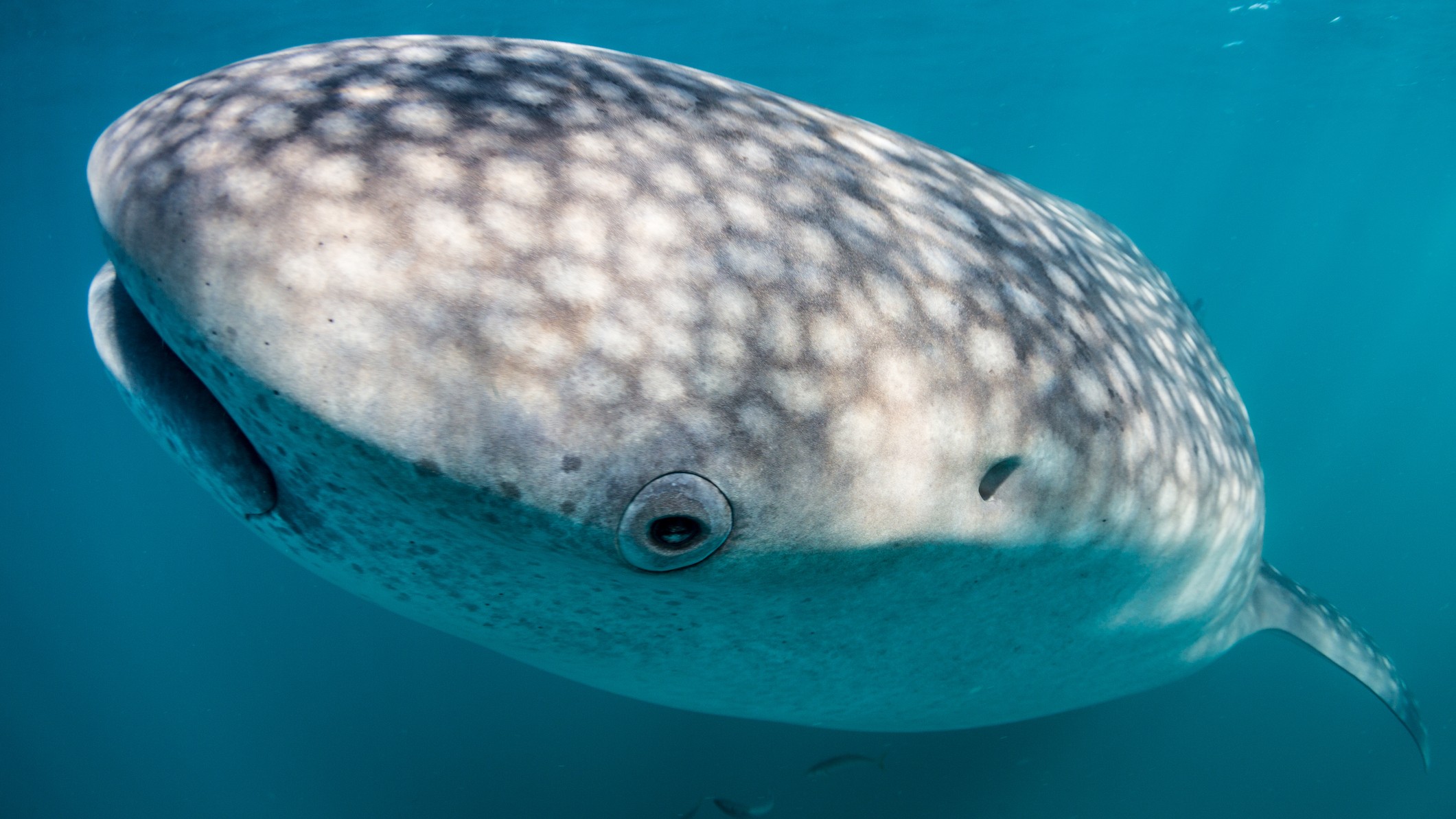
At up to 33 anxiety (x m) long, whale sharks are the biggest living species of fish in the world. Simply that's not what qualified them for a spot on this list. Instead, it'southward their centre-teeth.
In 2020, Japanese researchers discovered that whale shark optics are surrounded past tiny teeth called dermal denticles. According to Phys.org, these dermal denticles line the bulging pockets that concord the sharks' eyeballs (they don't have eyelids). The denticles are shaped similar to human molars, and they may assistance protect the whale sharks' eyes from attacks by small ocean creatures.
17. Godzilla sharks
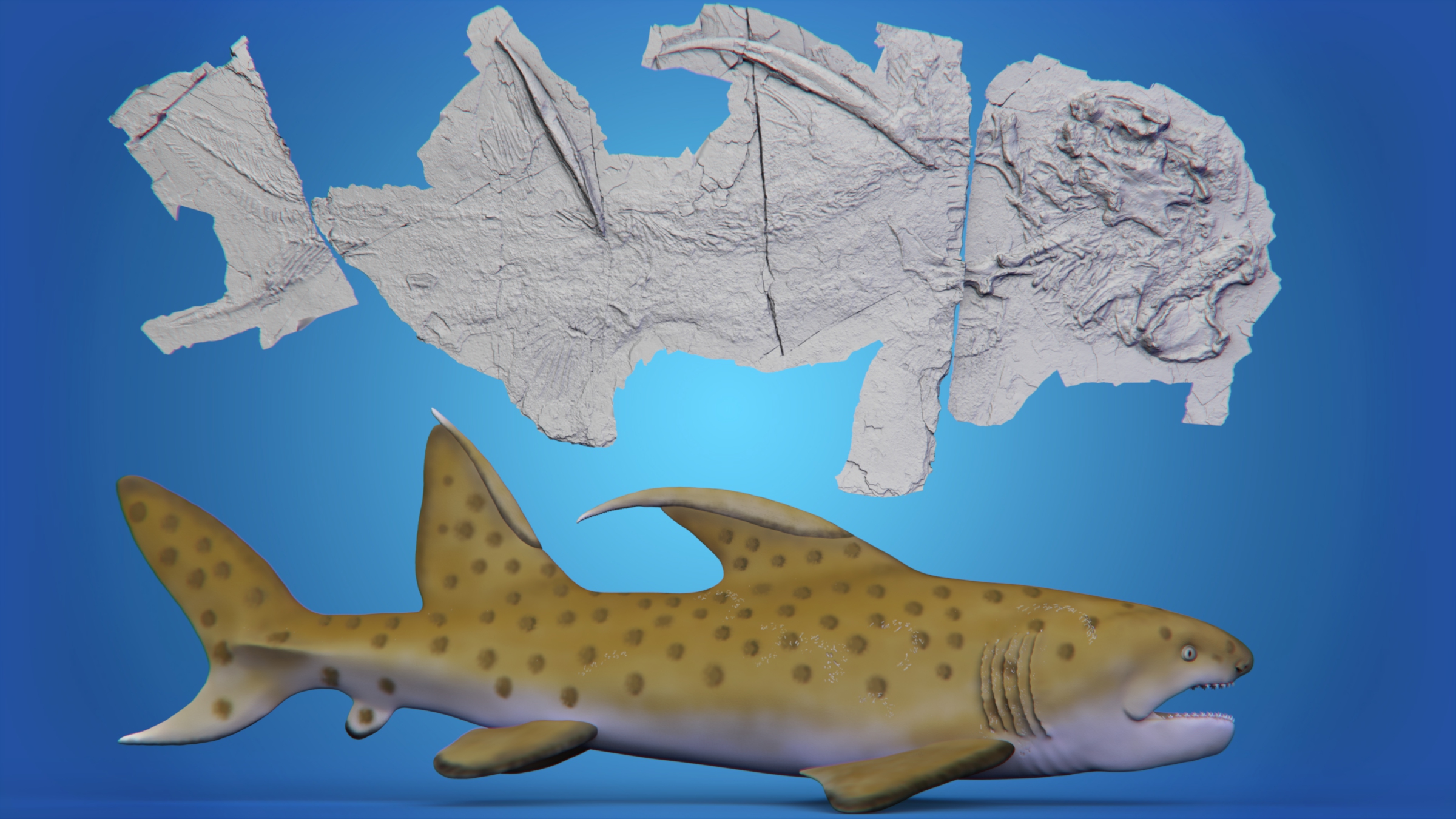
Three hundred 1000000 years ago, Godzilla sharks fabricated mincemeat of smaller fish in what was then an estuary and what is at present New Mexico. Godzilla is but a nickname for these six-feet-8-inches-long (ii m) monsters, though — their actual name is Hoffman'southward dragon sharks (Dracopristis hoffmanorum).
Pick your monster, Godzilla or dragon — either fits these sharks. The ancient animals had 12 rows of razor-abrupt teeth and a reptilian-looking pair of two-feet-v-inch-long (0.viii chiliad) fins on their backs. These sharks may have lurked near the estuary bottom and hunted small vertebrates and crustaceans with their crushing jaws, their discoverers told Alive Science.
sixteen. "Pig-faced" sharks
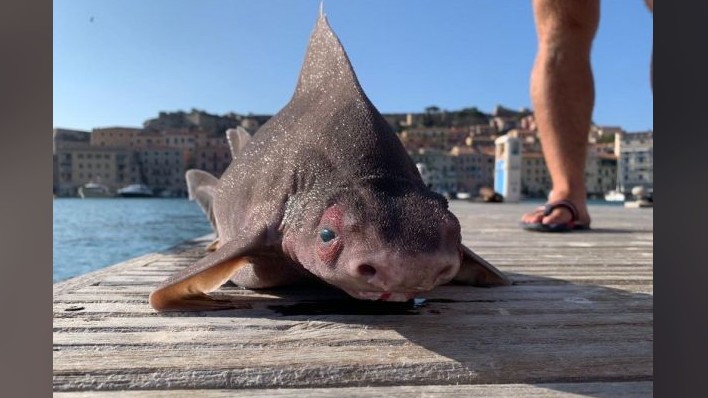
Not only do these sharks have flattened, piglike snouts, they also grunt like pigs when pulled from the water. For that reason, people fishing in the Mediterranean often call them "pig fish."
The sharks are officially named athwart roughsharks (Oxynotus centrina). These snub-nosed sharks grow to be about 3 anxiety 4 inches (ane 1000) long, according to the International Union for Conservation of Nature (IUCN), which lists angular roughsharks as a "vulnerable" species. The sharks are often accidentally caught in fishing nets, leading to declining population numbers.
15. Goblin sharks
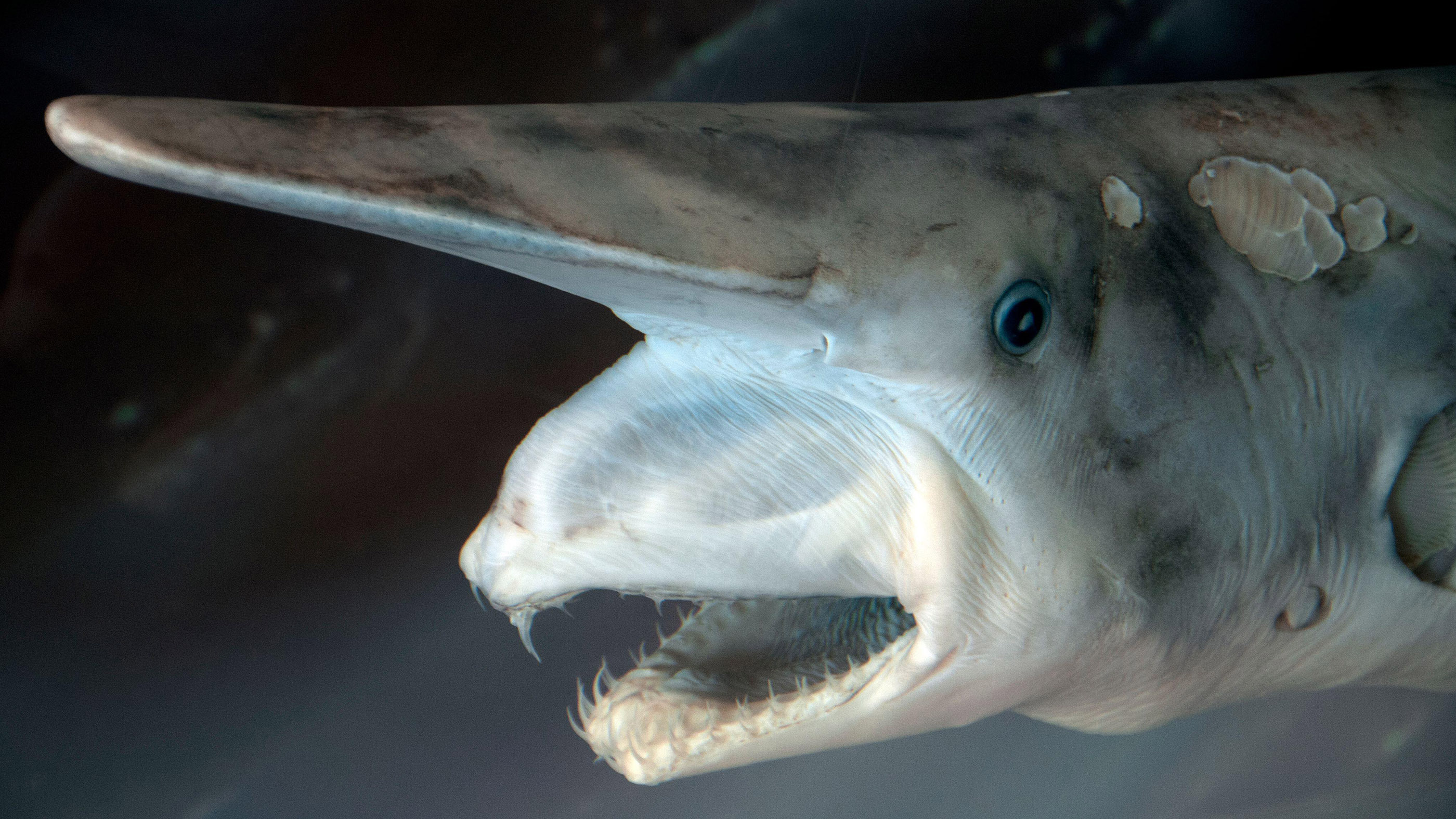
These sharks are pretty spooky. Goblin sharks (Mitsukurina owstoni) have abrupt, protruding teeth and long snouts, and their pinkish-purplish coloring looks weirdly mammalian. It's not difficult to run into how these sharks got their common proper noun.
Unless y'all're a crustacean or cephalopod, though, goblin sharks are not likely to be a threat. According to The Australian Museum, goblin sharks are bottom-dwellers, staying almost the ocean floor at depths of about 3,930 anxiety (1,200 m). Goblin sharks' creepy jaws extend outward to grab their prey. Their snouts are also studded with pores chosen ampullae of Lorenzini, which tin can discover tiny electrical charges coming off living organisms — a handy style to chase in the deep, dark ocean.
14. Cookiecutter sharks
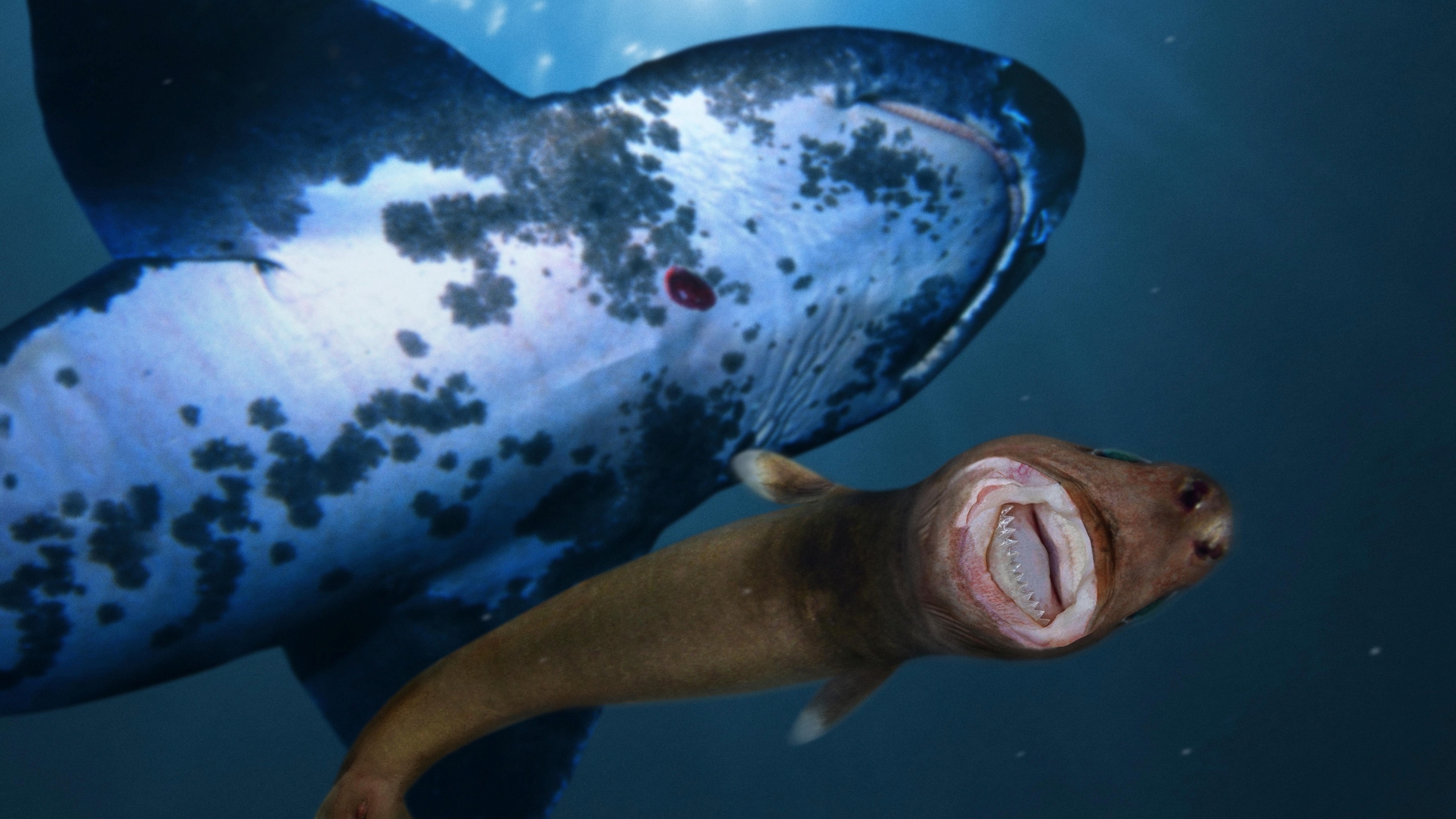
Cookiecutter sharks (Isistius brasiliensis) aren't very large — they abound to simply almost 20 inches (l centimeters) long — but they are very, very bitey. Using their circular, toothy jaws, these sharks sometimes nibble chunks off creatures much larger than themselves, including great white sharks, Live Science previously reported. At least one took a couple of bites out of a person in an set on that occurred between the islands of Hawaii and Maui in 2011. (The victim, a long-distance swimmer, recovered.) These sharks are named for their jaws, which look similar cookiecutters and allow the sharks to scoop globs of flesh from their prey.
These sharks occupy an unusual place in the food chain. Most of their diet is made upwards of small, bottom-dwelling house ocean animals that the sharks tin eat whole. But at dark, cookiecutter sharks sometimes travel toward the bounding main surface to munch on large prey like other sharks and orcas.
13. Frilled sharks
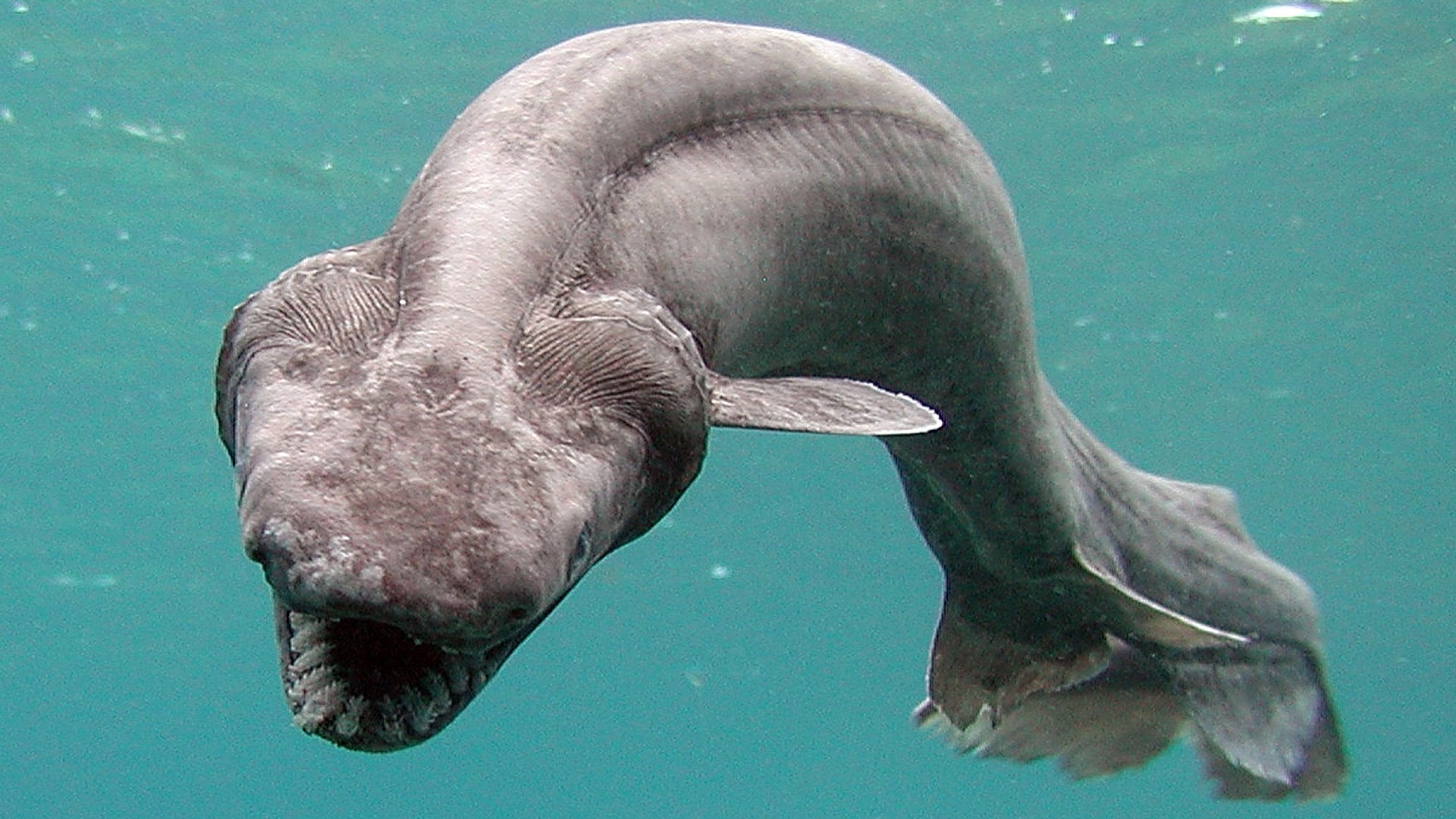
These frills tin kill. Frilled sharks (Chlamydoselachus anguineus) get their name from their 300 three-pointed teeth, which are arranged in rows that look like frills. Growing up to 5 anxiety (1.5 m) long, frilled sharks punch above their weight when targeting prey, using their sharp, astern-facing teeth to nab fish, squid and other sharks twice their size.
Amazingly, these sharks have remained basically the same for 80 million years, since earlier the dinosaurs went extinct. They live between 65 feet and four,900 anxiety (20 to i,500 thou) underwater in the Atlantic and Pacific oceans, co-ordinate to the International Union for Conservation of Nature (IUCN).
12. Skinless blackmouth catshark
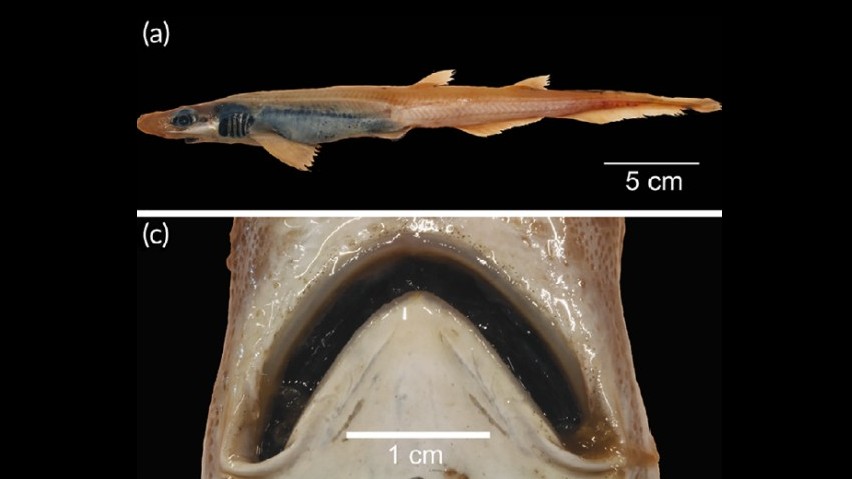
A naked shark pulled from the Mediterranean in July 2019 wasn't a new species but a completely mystifying individual with a strange condition: It was apparently born without skin or teeth.
Inexplicably, this blackmouth catshark (Galeus melastomus) was doing fine when it was accidentally caught by fishermen. It was about 3 years sometime, was a typical size for its historic period (blackmouth catsharks grow to about 2 anxiety iv inches, or seventy cm, long), and had a full belly.
"Our first reaction was, 'A shark without skin can't survive,'" Antonello Mulas, a biologist at the University of Cagliari in Sardinia, told Live Science at the time. "Merely, as Shakespeare said, in that location are more than things in heaven and Earth than you lot can imagine."
11. Viper dogfish
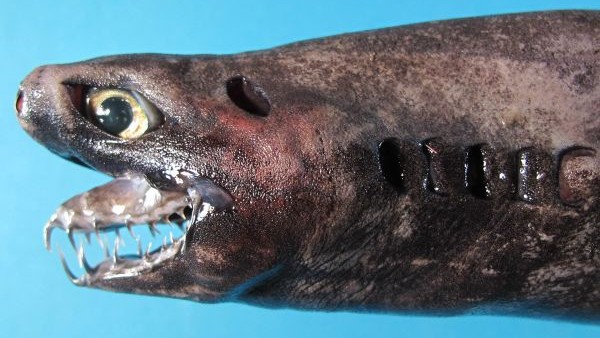
Viper dogfish (Trigonognathus kabeyai) might every bit well come from another planet. This species of deep-sea shark was only discovered in 1986, and it's been seen only rarely since. Distant relatives of goblin sharks, viper dogfish have a similar protruding jaw with a nasty set of scraggly teeth. But these creepy creatures are pip-squeaks: Viper sharks only grow to between vii and 21 inches (18 to 53 centimeters) long.
Viper dogfish too glow. Bioluminescent organs called photophores line these sharks' undersides. Viper dogfish are function of the lanternshark (Etmopteridae) family, whose members all glow. This glow likely camouflages the sharks when seen from below, as the gentle glow melds with the sunlight filtering through the h2o. The light may also attract pocket-sized prey in the dark bounding main depths.
10. Ghost sharks
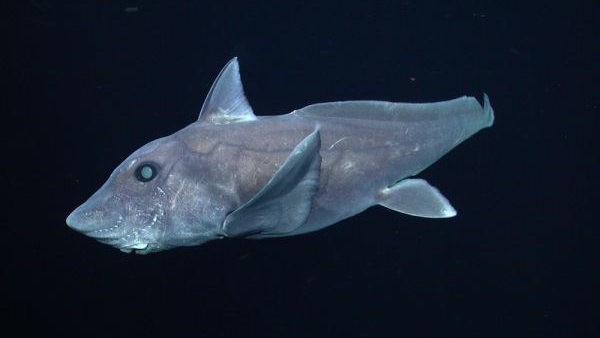
Gliding through the night ocean almost a mile (1,640 m) deep, pointy-nosed blue ratfish (Hydrolagus trolli) look like strange, silent phantoms. For that reason, these elusive sharks are sometimes known as "ghost sharks."
Ghost sharks were non formally identified until 2002, when researchers classified and named the species based on several dozen carcasses accidentally pulled in by line-fishing trawlers. Between 2000 and 2007, another group of scientists at the Monterey Bay Aquarium Research Institute (MBARI) in California captured a series of videos off the Central California coast showing living specimens.
Rounding out this species" weirdness is the spiky, club-like organ on the top of males' heads. This organ is used to position the female during copulation, co-ordinate to Lonny Lundsten, a senior enquiry technician at MBARI.
9. Cyclops dusky shark
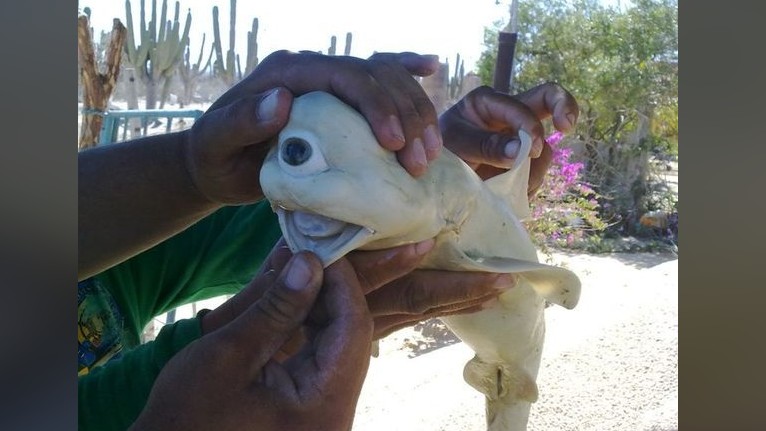
In 2011, commercial fishermen pulled a dusky shark (Carcharhinus obscurus) from the waters of the Gulf of California. The shark was pregnant, but when the fishers examined her, they plant that one of her fetuses was very unusual: Information technology was an albino, and it also had only i centre — smack dab in the middle of its snout, like a cyclops.
Researchers who examined the shark fetus found that the eye was made of functional optical tissue, but the shark would likely accept died outside the womb. Cyclopia is a developmental abnormality that occurs in a lot of species, including humans. It is usually associated with many other abnormalities and is typically fatal very soon after birth.
8. Genie's dogfish sharks
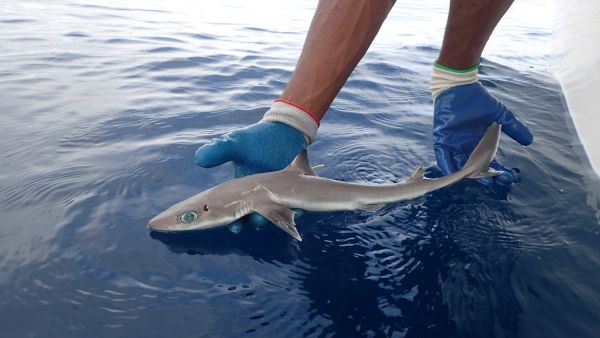
On the subject of eyes, Genie'due south dogfish sharks have some serious peepers. These sharks (Squalus clarkae) are deep-h2o creatures that live in the Gulf of Mexico and western Atlantic. Their small size (twenty to 28 inches long, or 50 to 70 cm) and giant infant-blues make them look like cuddly anime characters.
The shark species was discovered and formally described in 2018.
7. Swell sharks
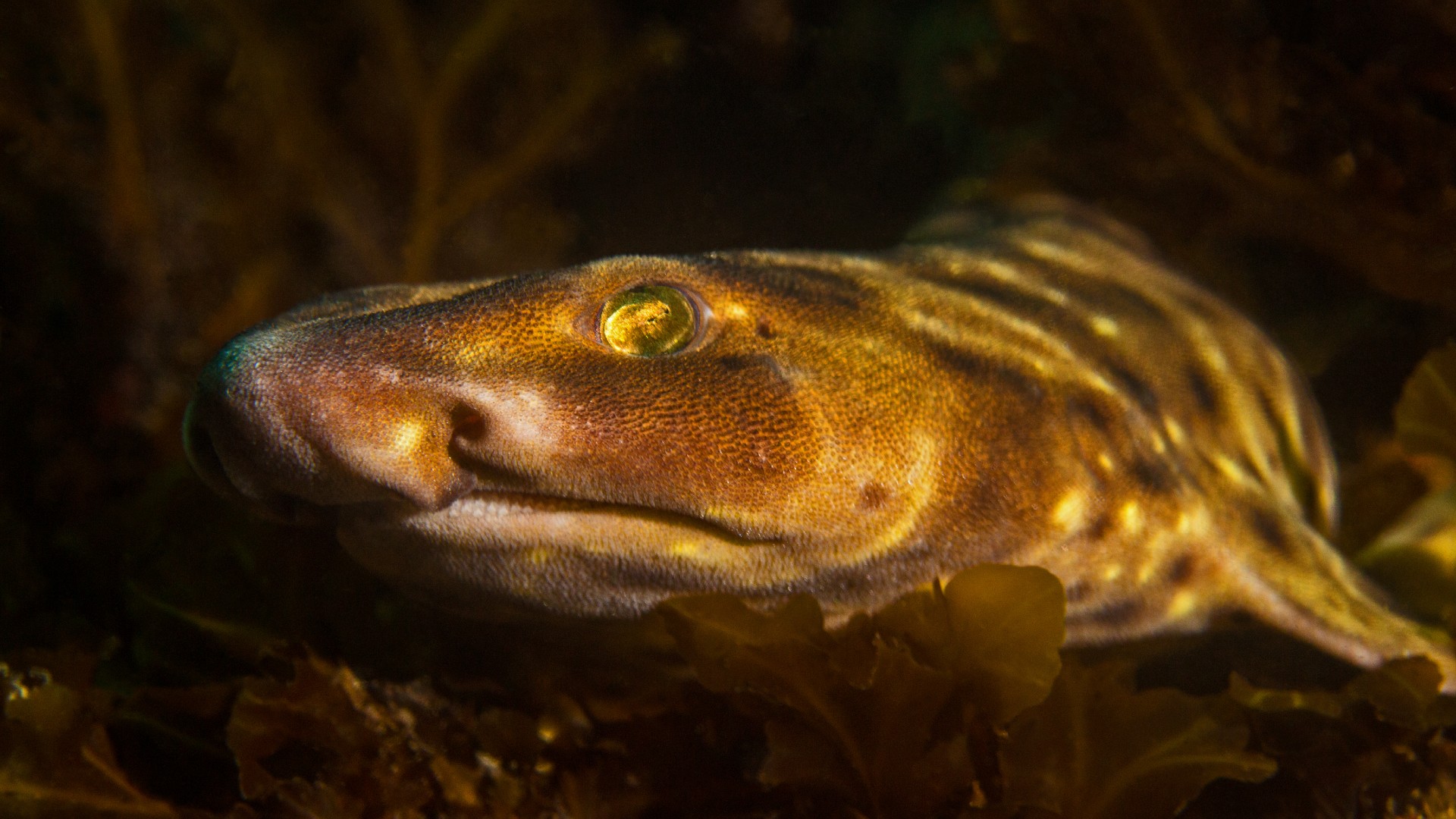
Even sharks demand to avoid predators. Swell sharks, which spend their days hiding in rocky crevices, have devised a clever plan to beat would-be predators: They slurp up a huge corporeality of seawater to corking to twice their normal size.
Swell sharks alive all over the identify, from the coast of California to the waters well-nigh the Philippines. Their swelling trick can intimidate predators if they're out at dark on the hunt; and during the mean solar day, the sharks can not bad up to lodge themselves inside their rocky hiding spots, preventing predators from pulling them out.
half-dozen. Velvet belly lanternsharks
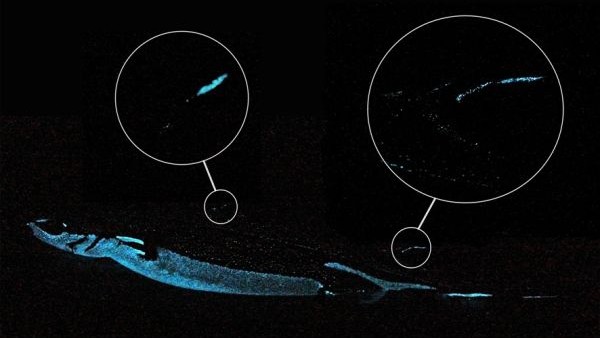
Velvet belly lanternsharks (Etmopterus spinax), which are dogfish sharks found deep in the Atlantic and Mediterranean, take come up with some other manner to avoid being eaten: They stick a large, glowing sign on themselves maxim, "Danger, spikes on shark are pointier than they may appear."
These sharks ordinarily grow to no more than 2 anxiety (lx cm) long, so they're vulnerable to larger predators. Their calorie-free-up spines probably warn hungry hunters that they are a tough mouthful to swallow.
v. Phoebodus sharks
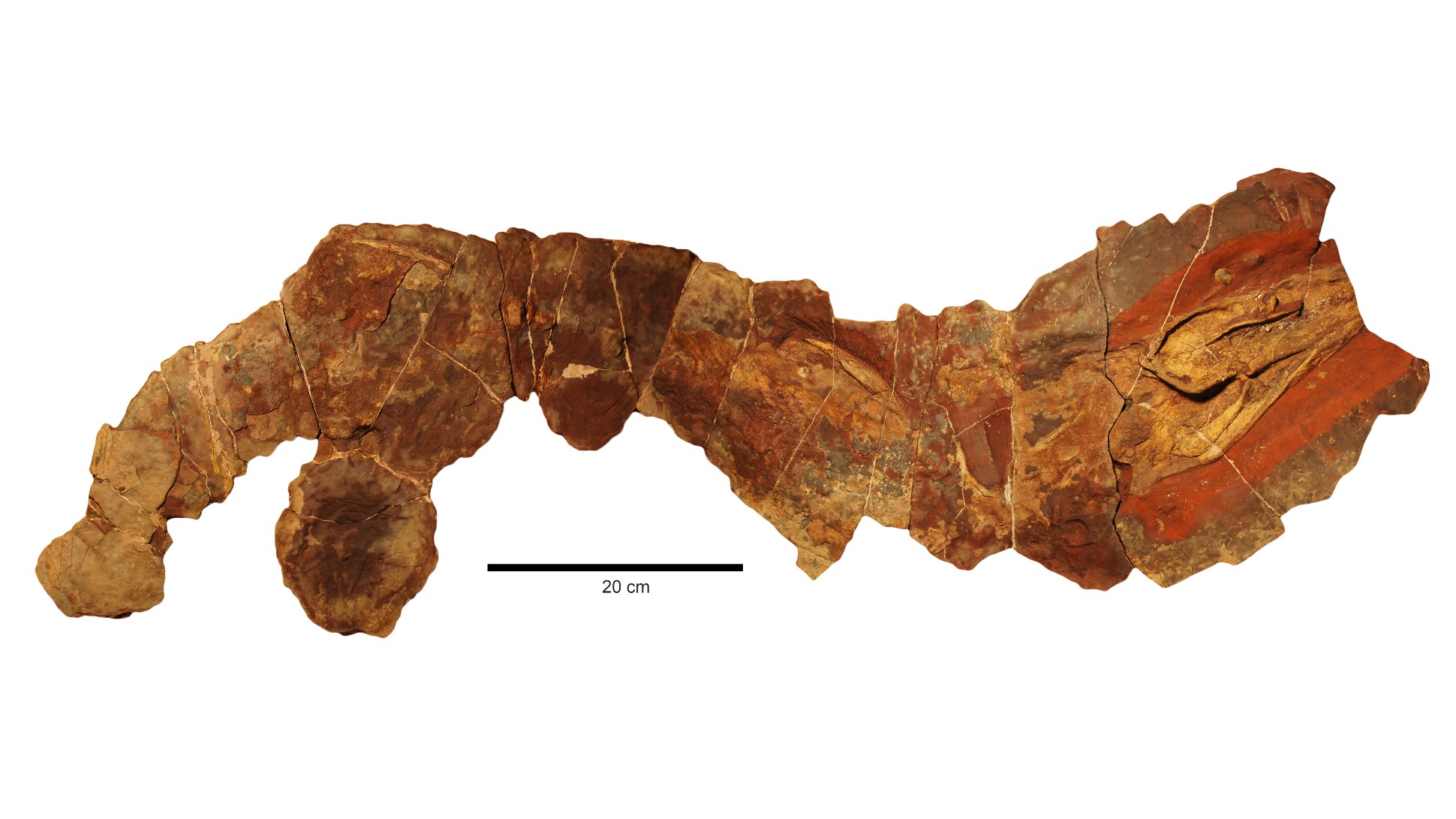
Phoebodus sharks were a strange bunch. They swam the seas about 350 million years ago and grew to 4 feet (ane.2 m) long. The first shark scales always found date back to 450 1000000 years agone, and the showtime shark teeth to about 410 million years agone, so Phoebodus sharks were pretty early the shark scene, evolutionarily speaking. They had 3-cusped teeth, eel-similar bodies and long snouts, and may have looked a bit like modern frilled sharks.
Much of these sharks' biology is known from an about-complete fossil constitute in Morocco. They may have hunted by snapping their casualty from the water in a quick, mortiferous bite.
4. Ninja lanternsharks
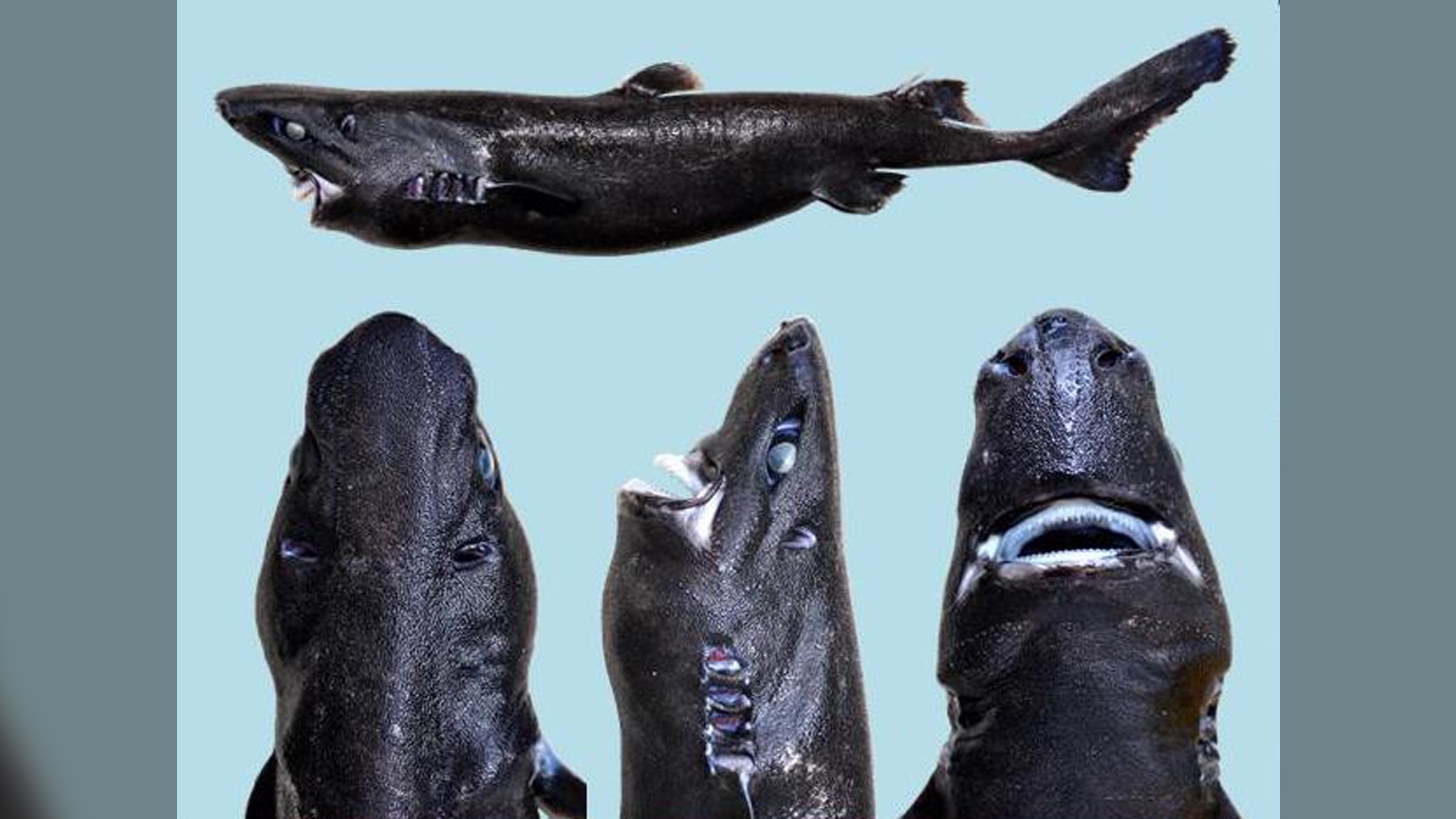
Credit for these stealthy sharks' common name goes to a couple of viii-year-olds, cousins of the scientist who discovered the animate being. According to Hakai Magazine, researcher Vicky Vásquez chose the proper noun ninja laternshark afterward her young cousins suggested that the sharks' sleek black pare and gentle bioluminescence — which is used to blend in with sunlight filtering downward from the ocean surface — reminded them of a "super ninja."
These snazzy-looking sharks have a fun scientific proper name, likewise: Etmopterus benchleyi, later on Peter Benchley, the writer of the book "Jaws" (Doubleday: 1974).
Ninja laternsharks are pocket-sized, growing to only about 1.6 anxiety (0.5 k) long. They live off the coast of Cardinal America.
3. Wobbegong sharks
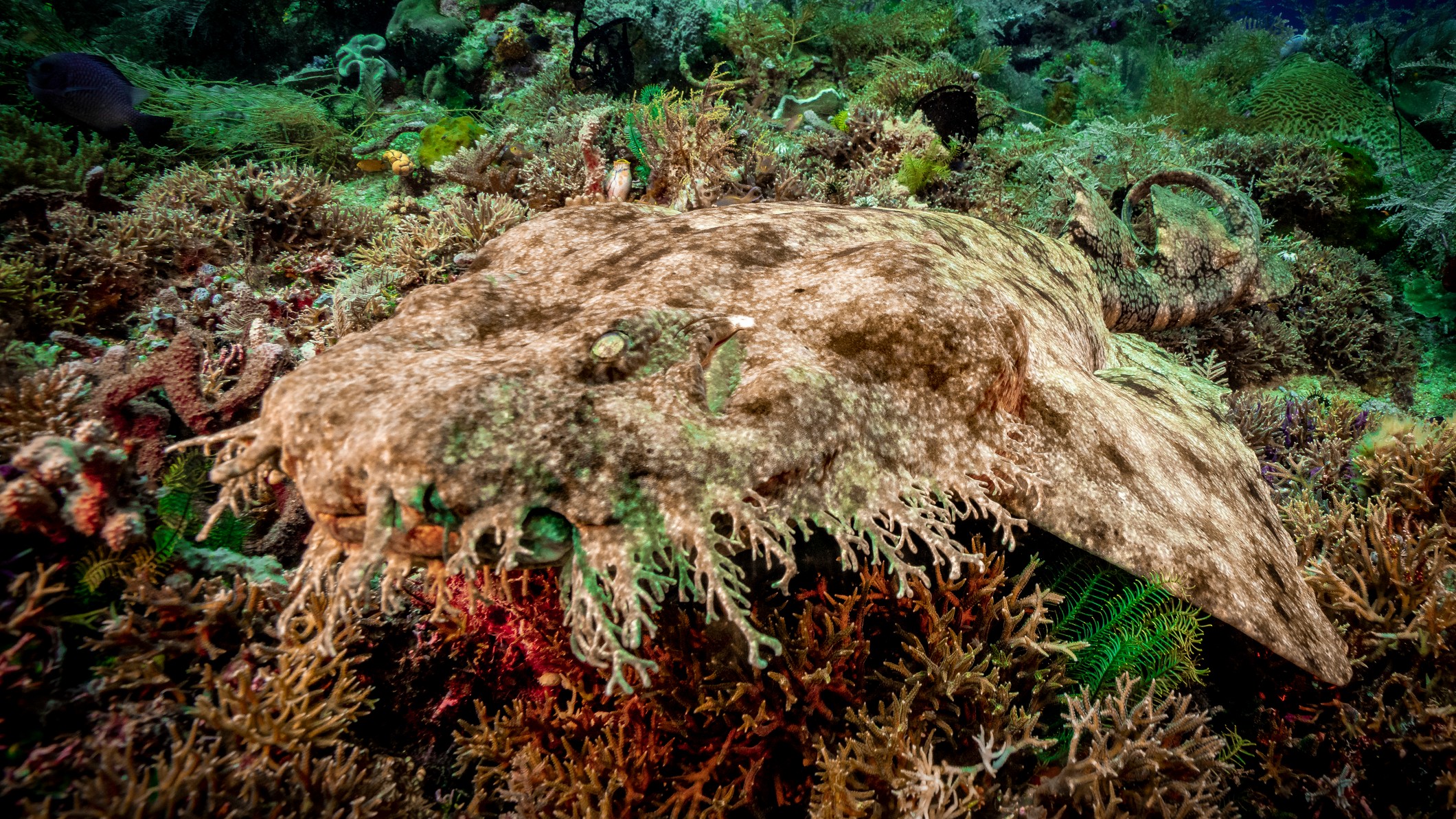
What practice yous become when you lot cantankerous a fish with a 1970s area rug? Probably a wobbegong shark. These bottom dwellers from the family unit Orectolobidae are camouflaged with splotchy orange-ish patterns. The sharks even sport a "frill" in the form of sensory lobes that line their jaws.
There are a dozen species of wobbegong sharks, spread across the eastern Indian Ocean and western Pacific Ocean. The largest grow to more than x feet (three m) long. "Wobbegong" ways "shaggy beard" in an Indigenous Australian language.
ii. Eagle sharks
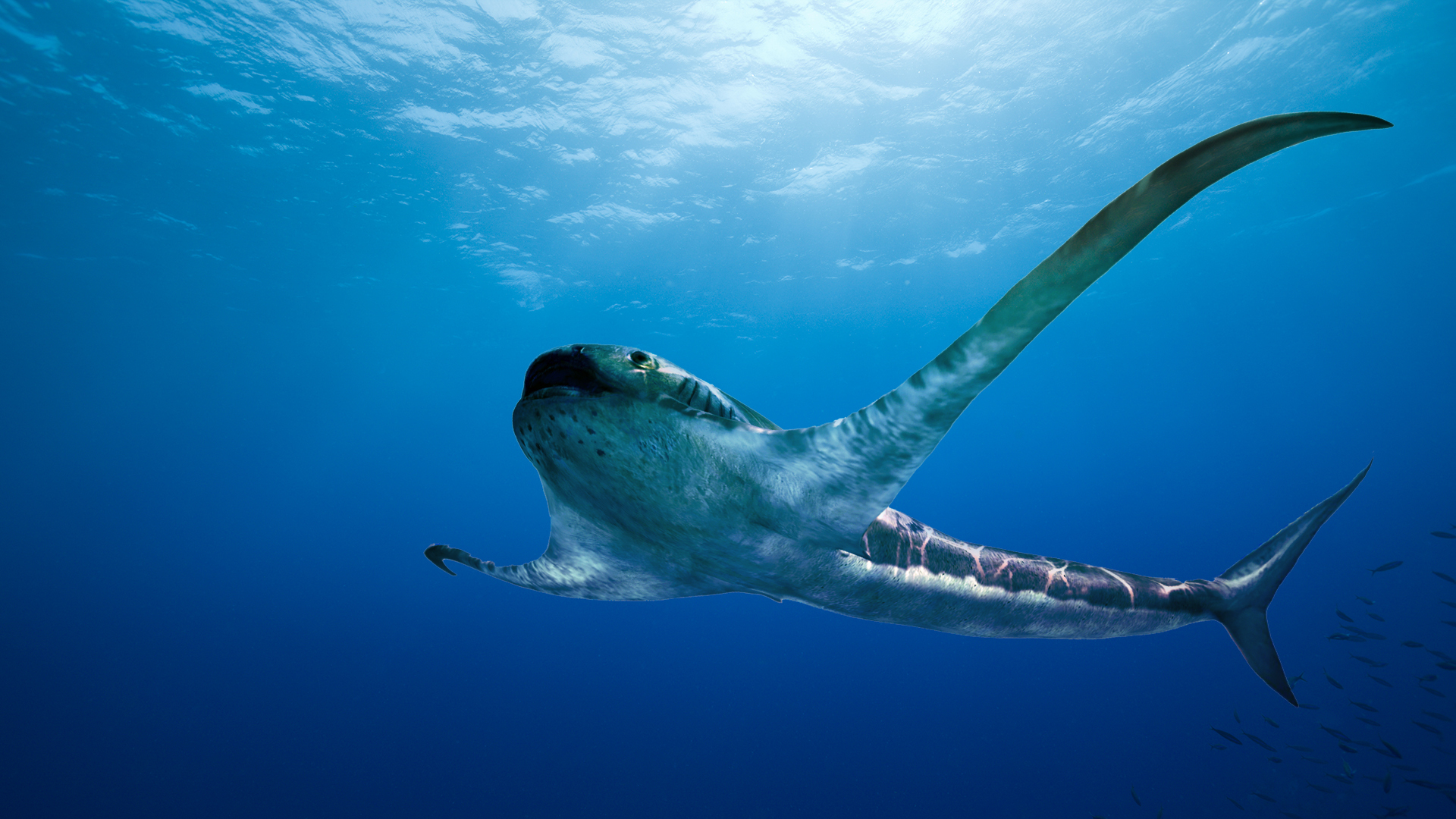
Sharks used to be even weirder. Ninety-three million years ago, in what is now Mexico, eagle sharks (Aquilolamna milarcae) glided through the sea on fins like wings. And what wings they were: The sharks' fins stretched half-dozen anxiety 2 inches (one.nine thousand) across, making the animals wider than they were long, equally they measured 5 feet v inches (ane.65 m) in length.
Though these sharks' teeth did not survive fossilization, their discoverers doubtable that they were filter feeders similar mod whale sharks.
i. Helicoprion sharks
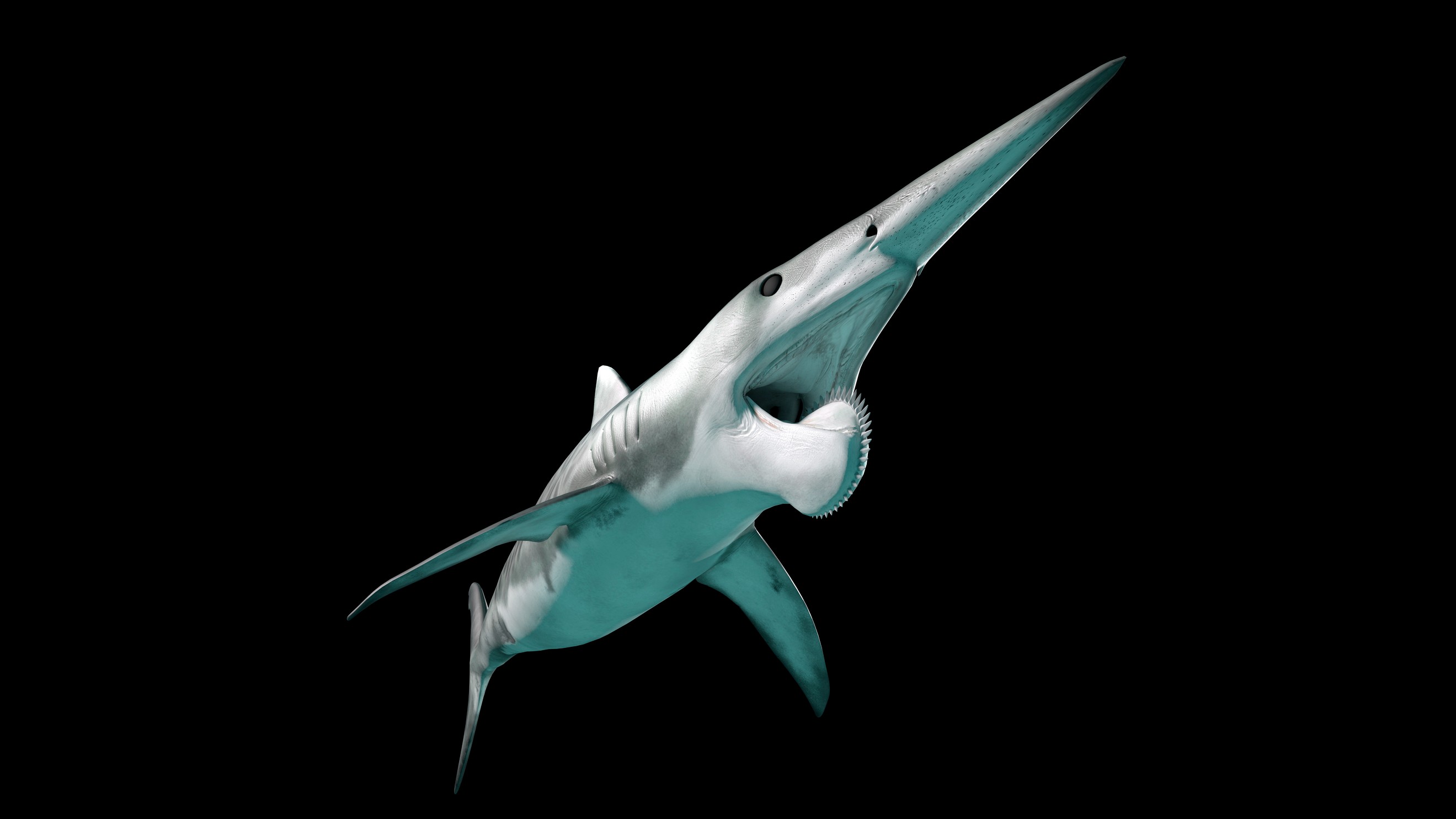
These creatures' bizarre buzzsaw-jaws are so mind-extraordinary that information technology took researchers more than a century to effigy out what the heck was going on with Helicoprion. The jaws, which look more similar spiral snail shells than anything shark-related, were first unearthed in the Ural Mountains in the late 1800s and belonged to an extinct genus that lived around 270 one thousand thousand years ago. A geologist recognized the whorl as teeth and named the creatures that sported them Helicoprion in 1899, according to Wired. Only no one could effigy out how a shark could fit such a strange saw of teeth into its mouth. Did the saw maybe fit in the shark's throat? Was it attached to some sort of extendable jaw tentacle that shot out when the animal was attacking?
It wasn't until 2014 that scientists figured it out, based on a specimen found in Idaho that had parts of the upper jaw preserved. It turns out, according to National Geographic (opens in new tab), that the curlicue of teeth fit into the sharks' lower jaw. The sharks, which grew to 25 anxiety (7.6 k) long, had no upper teeth to interfere with the buzzsaw system.
The study that nailed down the sharks' saw-tooth organization also constitute that Helicoprion were likely not technically sharks, but close shark relatives called ratfish. Simply with teeth like that, nosotros're going to let them slide into this inaugural anyway.
Originally published on Alive Science.
Source: https://www.livescience.com/weirdest-sharks-photos
0 Response to "Sharks Funny Pictures Sharks in the Gulf"
Post a Comment